Establishing the railway
During the mid - 1800s a train boom was in full flow. With the existing road infrastructure being in poor repair, everyone desperately wanted a train service in their town.
The Stirling and Dunfermline Railway
For the Stirling and Dunfermline Railway, this boom took root via the Edinburgh and Glasgow Railway Company, who wished to get access to the mineral deposits along the line of route, but also as a tactical measure to keep the rival Caledonian Railway (who had a railway to Stirling in partnership with the Scottish Central Railway) out of Fife. There were serious difficulties at the time of opening about securing a commitment from an operator to lease the railway, but it finally opened fully to Stirling in 1852.
This railway took the route west from Dunfermline Upper Station (1849 to 1968), out past Milesmark to Oakley (from 1850 to 1968), East Grange (1850 to 1958), Bogside (1850 to 1958), Kincardine (later Forestmill) (1850 to 1930 / 1979(freight)), Clackmannan (Clackmannan Road) (1850 to 1919), Alloa (1850 to 1968), Cambus (1852 to 1968), Causewayhead (1852 to 1955) and on to Stirling (1848 - present).
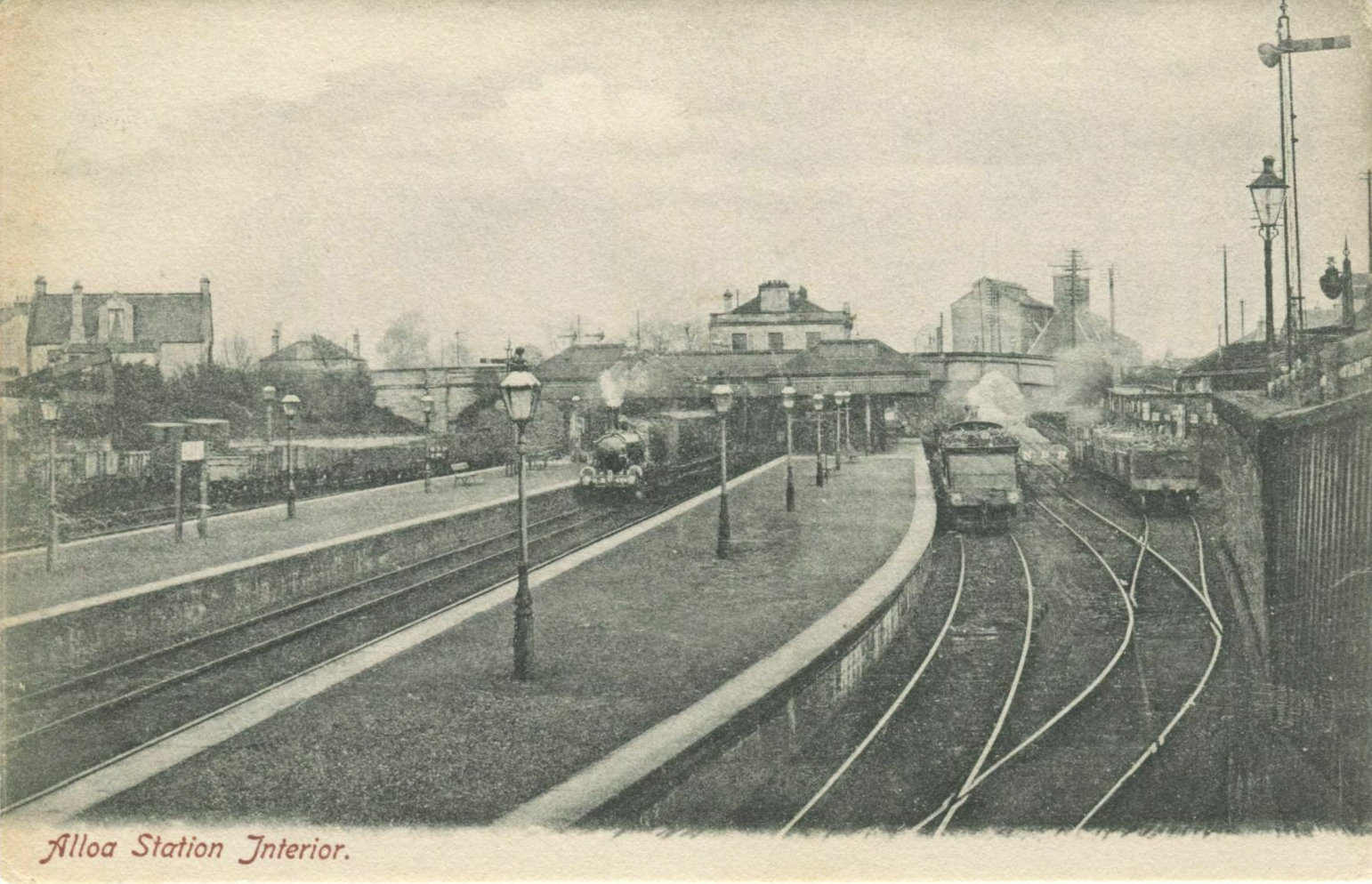
The original Alloa Station (1895) - Archive photo
The line was originally opened with the main purpose of moving minerals such as coal and ironstone, which it did on several stretches until the last freight services ceased in the 1980s.
The line from Dunfermline Upper Station to Kincardine Junction near Clackmannan was eventually removed and much of the track bed was converted into a cycle path. Dunfermline Upper Station was itself demolished and redeveloped into a retail park.
Back in the late 1800s though, the rail boom was still going well, and by 1865 the Stirling and Dunfermline railway had become part of the North British Railway's holdings.
The Kincardine Branch
In 1893 the North British Railway built a rail link from Kincardine junction via Clackmannan and Kennet (1893 to 1930) and Kilbagie (1894 to 1930) to Kincardine (1893 to 1930). This was named the Kincardine Branch.
A branch line from Alloa to Kincardine was not enough to satisfy the demands for a better railway service in the area, and connecting Kincardine and Dunfermline was proposed.
The Kincardine and Dunfermline Railway
The Kincardine and Dunfermline Railway was the result, authorised by the North British Railway (General Powers) Act, 1898. It was to leave the Dunfermline to Charlestown line at Meadowend and then run by Cairneyhill, Torryburn and Culross to meet the end of the existing Kincardine branch at Kincardine Pier.
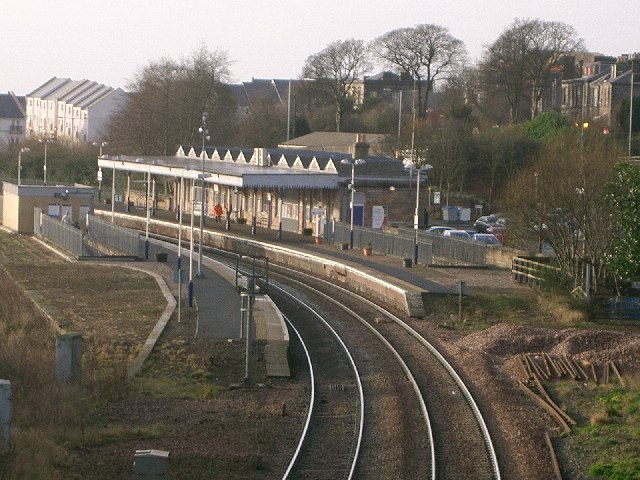
Dunfermline Town Station (2005) - Paul McIlroy
The stations and towns along this route were Dunfermline Comely Park (later Dunfermline Lower, now Dunfermline City) (1877 to present), Cairneyhill (1906 to 1930), Torryburn (1906 to 1930), Valleyfield, Culross (1906 to 1930) and on to Kincardine (1893 to 1930), Joining the Kincardine Branch line to allow through traffic to Alloa and Stirling.
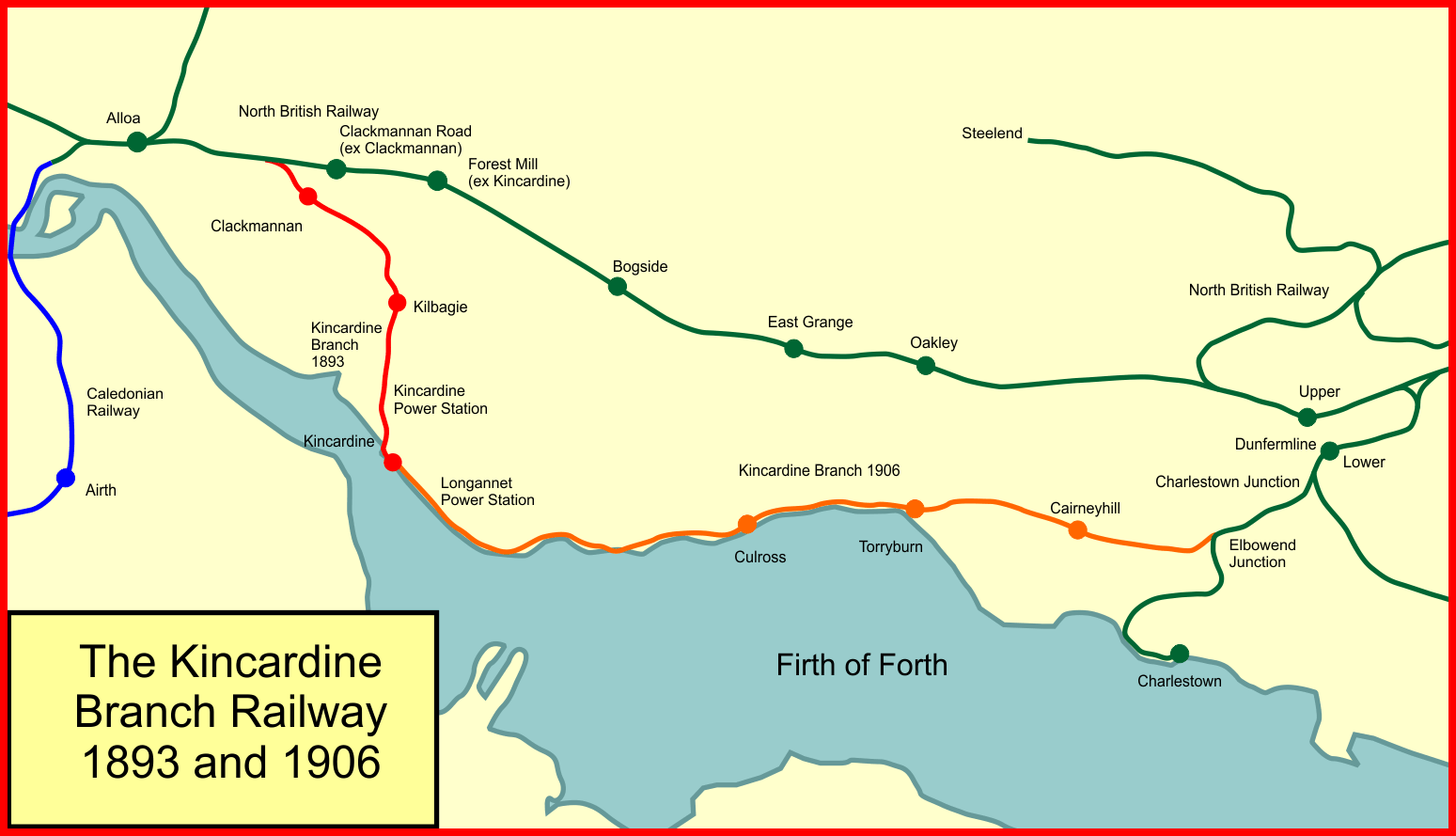
Map: Wikipedia
Key:
Red - Kincardine Branch
Orange - Kincardine and Dunfermline Railway
As with the Stirling and Dunfermline line, the priority was for freight traffic on the route, and subsequently only four passenger trains ran each way per day weekdays and five each way on a Saturday. The infrequent service led to lower than required passenger use, and with the Railways Act 1921 reducing competition and amalgamating hundreds of rail companies to reduce costs, almost inevitably the line closed to passenger traffic in 1930.
The line remained open to freight traffic from Dunfermline to Kincardine, but the passenger stations and superfluous infrastructure were demolished or removed.
So by 1968 there were no passengers travelling between Dunfermline and Stirling other than by bus or car. With deregulation of bus services via to The Transport Act 1985, bus services have seen a continual decline over the intervening years, to a point where car ownership has almost become a necessity in West Fife and Clackmannanshire.
The campaign to re-open the line
Against this backdrop of declining connectivity, a campaign was organised to see the Stirling to Alloa rail link re-established. This, along with an urgent need to pull coal to Longannet Power Station from the west coast, helped in the development of the Stirling / Alloa / Kincardine railway project, with work starting on the ground in 2004. The project opened fully in 2008, with passenger traffic commencing from Alloa to Stiling and on to Glasgow, which has been a great success. That story is for another page.
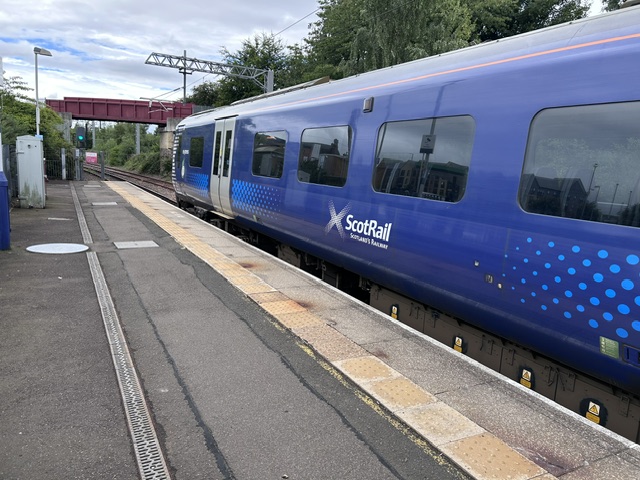
Train getting ready to leave the replacement Alloa Station, August 2026 - Cameron Little
References :
Wikipedia : Stirling and Dunfermline Railway
Wikipedia : Kincardine Line
Legislation.gov.uk : Railways Act 1921
Legislation.gov.uk : Transport Act 1985
Geograph.org.uk